
Books
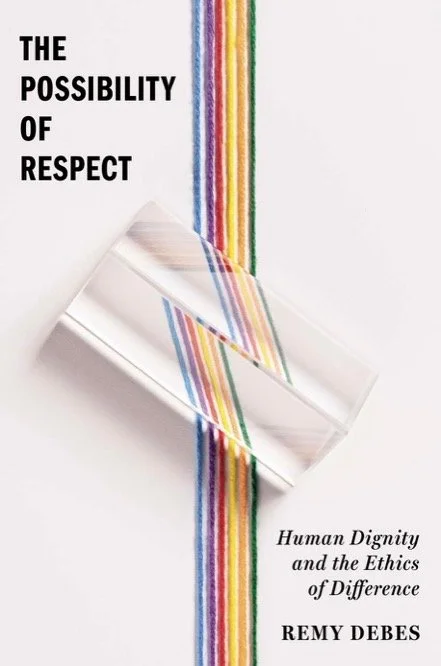
The Possibility of Respect
Oxford University Press, 2025This book defends a radical new theory of respect against the backdrop of a critical analysis of Western claims to moral progress. Drawing from a wide range of typically marginalized voices, it demonstrates the ways that our existing ideas about respect have misled our efforts to validate the equal human dignity of persons.

Dignity: A History
Oxford University Press, 2017The concept of dignity typically brings to mind an idea of moral status that supposedly belongs to all humans equally, and which serves as the basis of human rights. But as the chapters in this volume demonstrate, this moralized meaning of dignity is historically very young, and interwoven with many other concepts, some of which cut our modern moralized meaning.
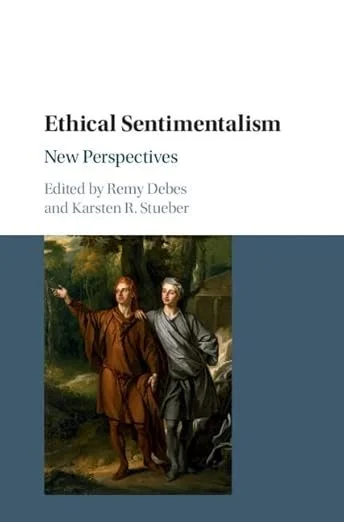
Ethical Sentimentalism
Cambridge University Press, 2017Co-edited with Karsten R. Stueber, the essays in this volume provide a comprehensive evaluation of the metaethical project known as “sentimentalism.” Each essay offers critical clarification of core concepts and argument, innovative answers to central challenges, and new directions for future work.
Forthcoming
The Smithian Mind (2027)
Co-edited with Michelle Schwarze and Nir-Ben Moshe
Selected Articles

“Adam Smith on Dignity and Equality”
British Journal for the History of Philosophy 20, no.1 (2012)
Where exactly should we place Adam Smith in the cannon of classical liberalism? Smith's advocacy of free market economics and defense of religious liberty in The Wealth of Nations suffice for including him somewhere in that tradition. But did he subscribe to the idea that all persons enjoy some basic and equal moral status, or what today we call “dignity”? This essay answers this question.

“Humanity, Sympathy, and the Puzzle of Hume’s Second Enquiry”
British Journal for the History of Philosophy 15, no. 1 (2007)
What does Hume mean by "humanity" in the second Enquiry, and what are we to make of its seeming replacement of "extensive sympathy" as the source of our moral sentiments? And, what happened to the associationist account of sympathy emphasized so keenly in the Treatise?

“Dignity’s Gauntlet”
Philosophical Perspectives 2, no. 1 (2009)
The fundamental methodological starting point of any theory of dignity must be to examine the nature of dignity – not its normative upshot. The latter seems so socially pressing we are apt to scramble to say something, anything, about it. But without some meta-theory, or metaethics of dignity, normative discussion will inevitably stumble. This paper attempts to lay the groundwork for such a metaethics, by establishing the properties, distinguishing characteristics, or explanatory demands that apply generally to any contentful, substantive account of dignity’s nature. .
Selected Book Chapters

“Adam Smith, Political Stability, and the Pull of Sympathy”
The Empathetic Emotions in the History of Philosophy (Oxford University Press, 2025)Adam Smith is well known for articulating one of the earliest accounts of empathy in western philosophy, albeit, under the terminology of “sympathy.” However, usually Smith’s account is studied as part of his moral philosophy. So, what role did sympathy play in his political philosophy?

“Empathy and mirror neurons”
The Routledge Handbook of Philosophy of Empathy (Routledge, 2017)The most influential empirical discovery regarding empathy is the discovery of so-called mirror neurons. Mirror neurons are single-cell neurons that activate during both the execution of certain actions and the observation of those actions. The chapter discusses the claims about emotion mirroring and the uptake for the subject of empathy more generally.

“A Place for Animals? Rethinking the History of Human Dignity”
Animal Dignity: Philosophical Reflections on Non-Human Existence (Bloomsbury, 2023)The concept of dignity typically refers to the basic worth or status that purportedly belongs to all persons equally and is often taken as the normative grounds of universal human rights. Does dignity extend to non-human animals?

“The Authority of Empathy (Or, How to Ground Sentimentalism)”
Ethical Sentimentalism (Cambridge University Press, 2017)Taking a lead from Adam Smith’s moral theory, this paper argues that empathy can underwrite a normative standard for emotion itself. Moreover, in the second part of the paper, I argue that the kind of “empathic justification” I propose is philosophically defensible. This further argument turns on demonstrating that some forms empathy have genuine normative authority, which is grounded in an under-appreciated aspect of human dignity – an affective aspect. And this aspect of the value, or “dignity,” of persons, underwrites the normative authority of empathy itself. The paper thus offers not only a novel account for justifying emotions, but also a novel, non-Kantian hypothesis about the value of persons.

“Respect: A History”
Respect: Philosophical Essays (Oxford University Press, 2021)Respect is one of the central concepts in contemporary moral thought. The history behind this idea, however, is not well understood - indeed, it is often misunderstood. This essay sets the record straight.

“From Einfühlung to Empathy: Sympathy in Early Phenomenology and Psychology.”
In Sympathy: A History (Oxford University Press, 2015)Since its introduction into English in 1909, as a translation of the German concept Einfühlung (feeling into), “empathy” has had a convoluted relationship to the concept of sympathy. This chapter explains this complicated conceptual history, but also draws lessons about the prospects of future empathy theory.